
Three-part series addresses the misconceptions regarding dementia and Alzheimer’s disease
Part 1
A confused older man was brought to the emergency room by his family. Diagnosed as having dementia, he was placed in a holding area and died hours later because of severe hypertension, which was the real cause of this man’s confusion. A 77-year-old woman, who, according to her family, sits all day and does nothing but stare at the television is called senile by her family. She is actually depressed and contemplating suicide. A once sharp 80-year-old man had been diagnosed with dementia a year earlier by his family physician because he had a poor memory and a CAT scan that was indicative of Alzheimer’s. No one noticed that his problems began after he started taking over-the-counter sleeping medication. He died recently because of an accidental drug overdose of this same medication.

The common thread in the above stories is that they were old and presumed to be demented or “senile.” Professionals and laypersons alike routinely and unwittingly dispense a life sentence of misery, or worse, death to these older individuals. These misjudgments result from a common misperception, which I call “The Deadly Myth of Aging.” As a result, millions of people live a life far different from the concept of the golden years. Many of these people prematurely die, and we, as a society, are doing very little to stop this tragedy.
The diagnosis of dementia is essentially a chronic death sentence. Our society sees this disorder as the beginning of the end for all older folks. However, dementia is significantly over-diagnosed. For example, there are millions of depressed older persons, some of whom have a condition called “pseudodementia.” These people appear to be demented, however, they are depressed, and with appropriate treatment, their dementia can be reversed.
There are many other conditions that resemble Alzheimer’s disease. A large number of elderly individuals have delirium, which, on a subacute basis, can mimic dementia. These persons become confused as a result of misusing medications or as a result of some medical condition. Most of these conditions can be reversed with proper medical treatment, and the dementia-like syndrome disappears. If the delirium-causing medical condition is not treated correctly, these individuals may die as a result. Improper diagnosis of dementia is a dangerous one, and millions are affected.
Consider having your elderly family members evaluated for depression. The latest research seems to indicate that depression can increase the risk for dementia in later years.
Part two will address the human cost of misdiagnosing Alzheimer’s disease.
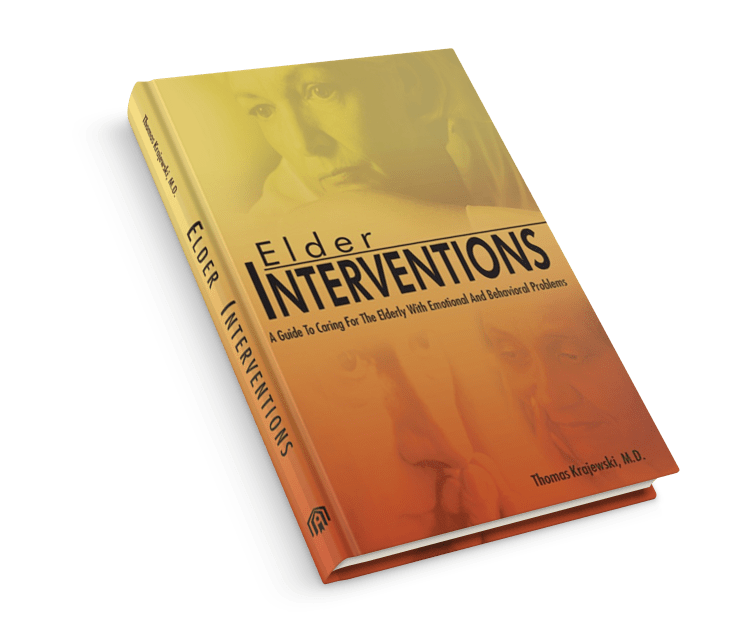
Read more from “Elder Interventions: A Guide To Caring For The Elderly With Behavior And Emotional Problems” by purchasing the book here: www.amazon.com/Elder-Interventions-Emotional-Behavioral-Problems/dp/1420882120
Or here: www.authorhouse.com/en/bookstore/bookdetails/253071-elder-interventions
Dementia series:

Dementia: Human Costs of Misdiagnosis
Currently, 1.6 million people reside in nursing homes and almost one million in assisted living facilities. The annual average costs of nursing home and assisted living beds are about $70,000 and $24,000 per year respectively.

Other blog posts:

Helping Those with Memory Problems
In this part of the series, we discuss other products that can be helpful to track individuals who have memory problems and a history of losing their belongings.

Tracking Older Adults
In this part of the series, we focus on those who are still able to drive, but may may have signs that cause family members to want to keep an extra eye on them.

Dementia: Destroying the Aging Myth
Forget about their age for a moment. If younger persons had the same symptoms of dementia, we would use all of our resources to find the cause and fix it. Let us give our elders that same opportunity.
 Elder Help Online